Itch Conditions

What is Neuropathic Itch?

Neuropathic itch is an itch that is a result of nervous system damage. This can be a result of direct nerve damage or secondary to a variety of systemic diseases. Because neuropathic itch is a result of nerve damage, there is a variety of associated symptoms, such as burning, tingling, and numbness.

What are the symptoms?

Symptoms of neuropathic itch include:
  • Burning or pain
  • Electric shock sensations or tingling
  • Numbness
  • Severe warmth or cold in the areas of itchiness
  • Increase or decrease in skin sensitivity in the areas of itchiness

Common Questions

Is there a cure for neuropathic itch?

There currently is no medication that completely cures neuropathic itch. Current treatment strategies are directed toward alleviating itch severity, reducing scratching behavior, and addressing any underlying causes that may help treat the symptoms of neuropathic itch. For more information on treating neuropathic itch visit our treatment page here.

Where does neuropathic itch come from?

As noted previously, neuropathic itch can be caused by systemic conditions or by conditions specific to peripheral nerves (nerves in the skin or organs). It is important to consider all the various causes before diagnosing neuropathic itch, so that the underlying cause can be diagnosed and treated.

Systemic causes:
  • Stroke
  • Diabetes
  • Vitamin deficiencies
  • Toxin exposure
  • Multiple sclerosis
Peripheral causes:
  • Brachioradial pruritus, a nerve disorder that specifically targets the arms
  • Notalgia paresthetica, caused by trapping of a nerve
  • Post-herpetic neuralgia, caused by the Herpes Zoster (or shingles) virus damaging local nerves

Is neuropathic itch contagious?

Neuropathic itch is not an infectious disease; therefore, it is not contagious and cannot be passed from one person to another.

How is neuropathic itch diagnosed?

Because there are many causes of neuropathic itch, diagnosis may involve a multidisciplinary team of experts, including neurologists and dermatologists. Based on your specific signs and symptoms, these experts may order skin biopsies, nervous system imaging, or other specific testing to evaluate your itch.

Neuropathic Itch

Read more …What is Neuropathic Itch?

  • Hits: 683

What is Uremic Itch?

Uremic itch is a severe itch that associated with chronic kidney and autoimmune disease. It is not fully understood what causes uremic itch, but recent research has noted some risk factors that can worsen symptoms. Some risk factors include:
  • Insufficient dialysis (i.e. not often enough or for short periods of time)
  • Dysfunction of the parathyroid glands, which are small glands in the neck that help regulate calcium levels in the body
  • Elevated calcium or phosphorus
  • Dry skin, or xerosis
  • Elevated serum magnesium and aluminum concentrations

What are the symptoms?

Uremic pruritus often causes a severe itch that is present all throughout the body. However, it can more severely impact larger areas of skin, such as the back, arms, and legs. Look for symptoms such as:
  • Worse itch at night, interrupting sleep
  • Worse itch with heat and stress
  • Itch that improves or worsens during dialysis sessions
  • Normal or dry skin, but rarely a significant rash
  • Signs of scratching, such as excoriations, heavily thickened skin, or nodules at sites of scratching

Common Questions

Is there a cure for uremic itch?

Aside from kidney transplantation, there is currently no definitive cure for uremic pruritus. Current treatment strategies are directed toward modifying the dialysis regimen, alleviating itch severity, reducing scratching behavior, and addressing any psychological concerns that may be caused by the patient’s itch symptoms and kidney disease.

For more information on treating itch in uremic itch visit our treatment page here.

Where does uremic itch come from?

Uremic pruritus is poorly understood, but the cause is thought to be related to kidney function and the immune system.
  • The immune system may be attacking nerve fibers that send itch signals to the brain.
  • Additionally, immune cells may be releasing signals that worsen itch, which is particularly during hemodialysis.
  • Imbalances in your body’s neurological pain and itch sensation systems may cause increased itch sensation.
  • Finally, kidney disease patients tend to have increased levels of calcium and phosphorus in their blood, which can further cause inflammation and worsened itch.

Is ultraviolet irradiation therapy used to treat uremic pruritus?

Ultraviolet (UV) therapy can be used to treat uremic pruritus when other treatments are unsuccessful at controlling the symptoms. UV therapy has been shown to be relieve itch and can be temporarily effective in the treatment of uremic pruritus. UV therapy should be used with caution, as side effects of UV treatment include skin damage, skin cancer, and eye damage. If UV therapy is recommended by your physician, ensure that it is used properly and safely.

Is uremic itch contagious?

Uremic itch is not an infectious disease; therefore, it is not contagious and cannot be passed from one person to another.

How is uremic itch diagnosed?

Because uremic pruritus is common in dialysis patients, laboratory testing is not routinely done for diagnosis. Telltale signs of uremic pruritus includes onset of itch during dialysis, persistent symptoms, or abnormal blood tests showing calcium, phosphate, parathyroid hormone, or kidney dysfunction.

Uremic Itch

Read more …What is Uremic Itch?

  • Hits: 673

What is Prurigo Nodularis?

Prurigo nodularis is a rare, chronic inflammatory skin condition.

What are the symptoms?

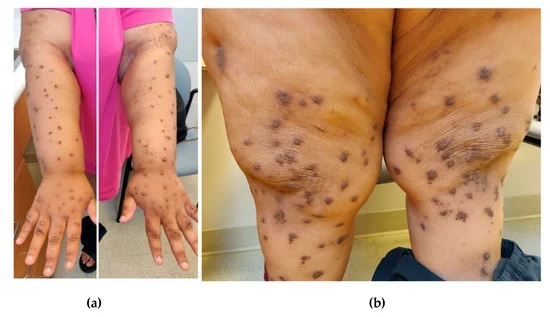
Prurigo nodularis presents with numerous firm, itchy, dome-shaped nodules and lumps on the skin, usually in patients in their 40’s and 50’s. The itch in prurigo nodularis is thought to be more severe and intense than itch in either atopic dermatitis or psoriasis.
Prurigo nodularis
Figure 1. (a) Nodules in bilateral distribution on arms and (b) legs in a patient diagnosed with prurigo nodularis.
Symptoms to look for:
  • Severe, intense itchiness
  • Hard, itchy bumps on skin
  • Much like psoriasis, these bumps usually affect the extensor surfaces (such as the knees and elbows).
  • Patients may have just a few nodules, while others may have dozens.
  • Bumps can range in size from millimeter up to half an inch.
  • The skin overlying these bumps is often excoriated, meaning that they are peeling, open, and/or bleeding.
  • Can range in color from red to dark brown.
  • These bumps are usually symmetrically distributed, and much like psoriasis, commonly affect the extensor surfaces of the arms and legs and trunk. PN can occasionally affect the face, although this is more rare.

Common Questions

Is there a cure for prurigo nodularis?

There currently is no medication that completely cures prurigo nodularis. For more information on treating itch caused by prurigo nodularis visit our treatment page here.

Where does prurigo nodularis come from?

Prurigo nodularis is thought to result from the itch-scratch cycle, a vicious cycle of chronic itch followed by repeated scratching, which worsens the itch. While is it unclear what exactly triggers the itch-scratch cycle, it is believed that it arises from a combination of abnormalities in the nerve cells and immune components within the skin.
  • Research suggests that the distribution of nerves in the outer and inner layers of the skin is different in PN, and may affect how the skin responds to triggers.
  • Certain types of immune cells are found in higher numbers in patients with PN. These cells are thought to secrete chemical signals that cause inflammation and contribute to itch.
  • Further research is being done to better understand the cause of prurigo nodularis. Check out our research page by clicking here.

Who gets prurigo nodularis?

Prurigo nodularis can affect individuals of any age, but prurigo nodularis is most frequently seen in patients in their 50’s and 60’s. Females are more frequently affected than males. Patients with skin of color, including African American, Asian, and Hispanic patients, are at increased risk of developing prurigo nodularis compared to Caucasian patients.

Several medical conditions have also been found to lead to a greater risk of developing prurigo nodularis, including:
  • HIV infection
  • Iron deficiency
  • Renal failure
  • Certain allergic conditions, such as hay fever, asthma, and atopic dermatitis

Is prurigo nodularis contagious?

Prurigo nodularis is not an infectious disease; therefore, it is not contagious and cannot be passed from one person to another.

How is prurigo nodularis diagnosed?

Physicians can usually diagnose PN with a thorough skin examination and medical and family history. Rarely, a small skin biopsy or patch testing may be done to either establish a diagnosis or to rule out other skin diseases.

Prurigo Nodularis

Read more …What is Prurigo Nodularis?

  • Hits: 757

What is Psoriasis?

Psoriasis is a rare inflammatory disease that presents between the ages of 15 and 25, but can occur at any age. The body’s inflammation shows on the skin as pink plaques and scales. The condition can affect other organs as well, with 1 in 3 people with psoriasis developing psoriatic arthritis.

Psoriasis occurs in several different forms, each with its own unique features:
  • Chronic plaque psoriasis is the most common subtype, with rashes commonly affecting the elbows, knees, and the groove between the buttocks.
  • Guttate psoriasis is characterized by many small rashes less than 1 centimeter in diameter, usually involving the trunk and the upper segment of the arms and legs.
  • Pustular psoriasis shows up as small, pus-filled bumps and blisters. Patients with pustular psoriasis are likely to experience fever, chills, and malaise and are at higher risk of developing complications involving the kidneys, eyes, lungs, and liver.
  • Erythrodermic psoriasis involves a widespread rash that covers most of the body surface. The affected skin is usually painful, itchy, and may develop small pimple-like bumps.

What are the symptoms?

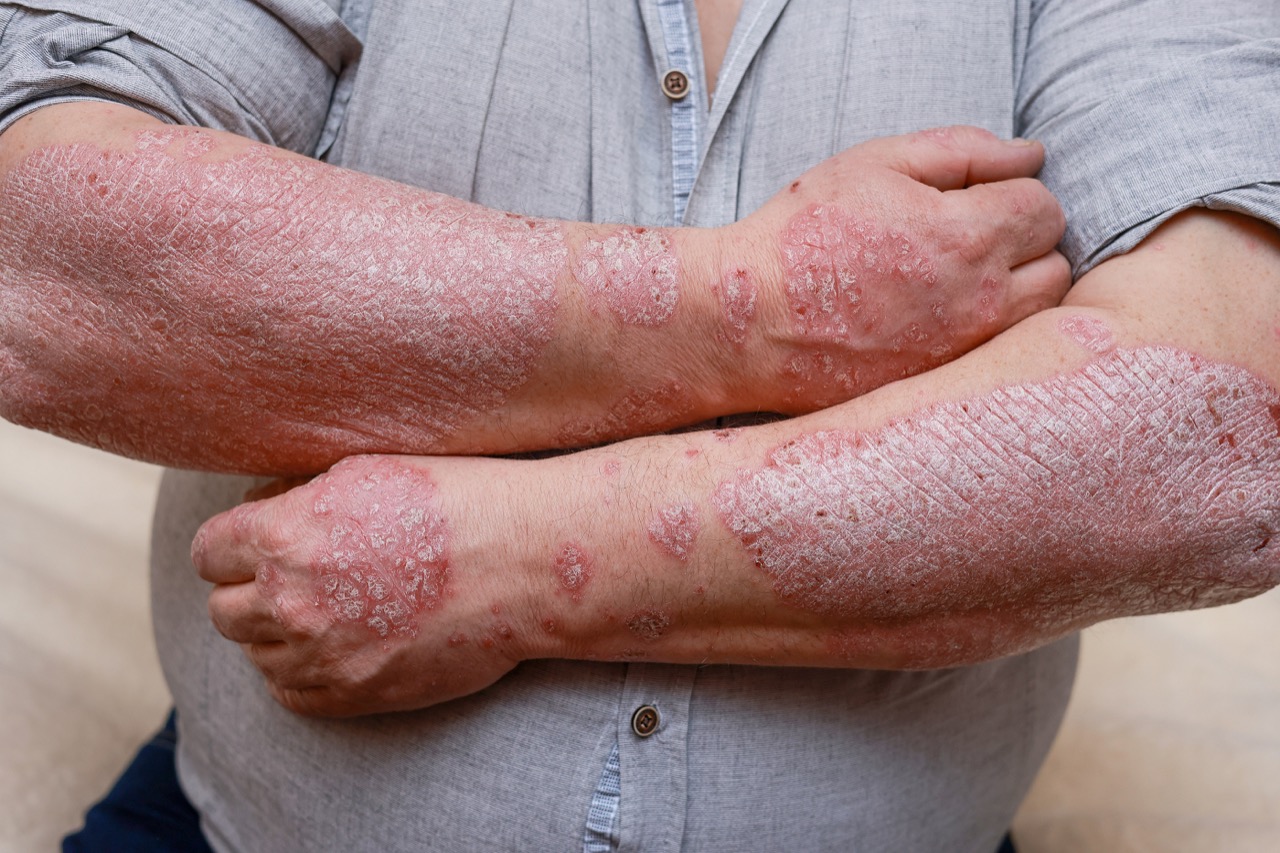
Psoriasis usually presents with red, itchy rashes that are sharply defined, ranging in size between 1 centimeters to more than 10 centimeters in diameter. Depending on the type of psoriasis, patients with psoriasis may also notice:
  • Silvery scales
  • Painful cracks
  • Dry skin
  • Burning with itching
  • Painful joints
  • Nail changes in color or shape
  • Small, pus-filled bumps
Psoriasis rashes usually affect the elbows, knees, trunk, and scalp, but can affect other parts of the body, such as the ear canals, the umbilicus (belly button), and palms and soles of the hands and feet. In certain types of psoriasis, the rash can involve most of the body surface. In children, rashes may occur on the face and scalp, in the diaper region, or on the sides of the arms and legs opposite the knees and elbows.

Common Questions

Is there a cure for psoriasis?

There is currently no treatment that completely cures psoriasis. Treatments for psoriasis are aimed toward reducing the severity of symptoms and minimizing their often debilitating impact on overall well-being. For more information on treating itch in psoriasis visit our treatment page

Where does psoriasis come from?

Psoriasis is a disease of the immune system that causes the outermost layer of the skin (epidermis) to grow rapidly. More specifically, it is believed that specific triggers cause immune cells to move to the epidermis, where they cause inflammation and release signals that cause skin cells to rapidly increase in number. While normal, healthy skin cells typically take about 4 weeks to mature and turn over, psoriasis patients’ skin cells do so within just a few days.

Who gets psoriasis?

Psoriasis can affect men and women of all ages. However, children are more likely to develop rashes that affect the scalp and diaper areas. Psoriasis is also commonly seen in individuals with HIV and is sometimes the first sign of infection.

Is psoriasis contagious?

Psoriasis is not an infectious disease; therefore, it is not contagious and cannot be passed from one person to another.

How is psoriasis diagnosed?

Physicians can diagnose psoriasis based on a thorough skin examination and a close evaluation of your medical and family history. If you think you may have psoriasis, please contact a dermatologist for further evaluation.

Psoriasis

Read more …What is Psoriasis?

  • Hits: 735

What is Atopic Dermatitis?

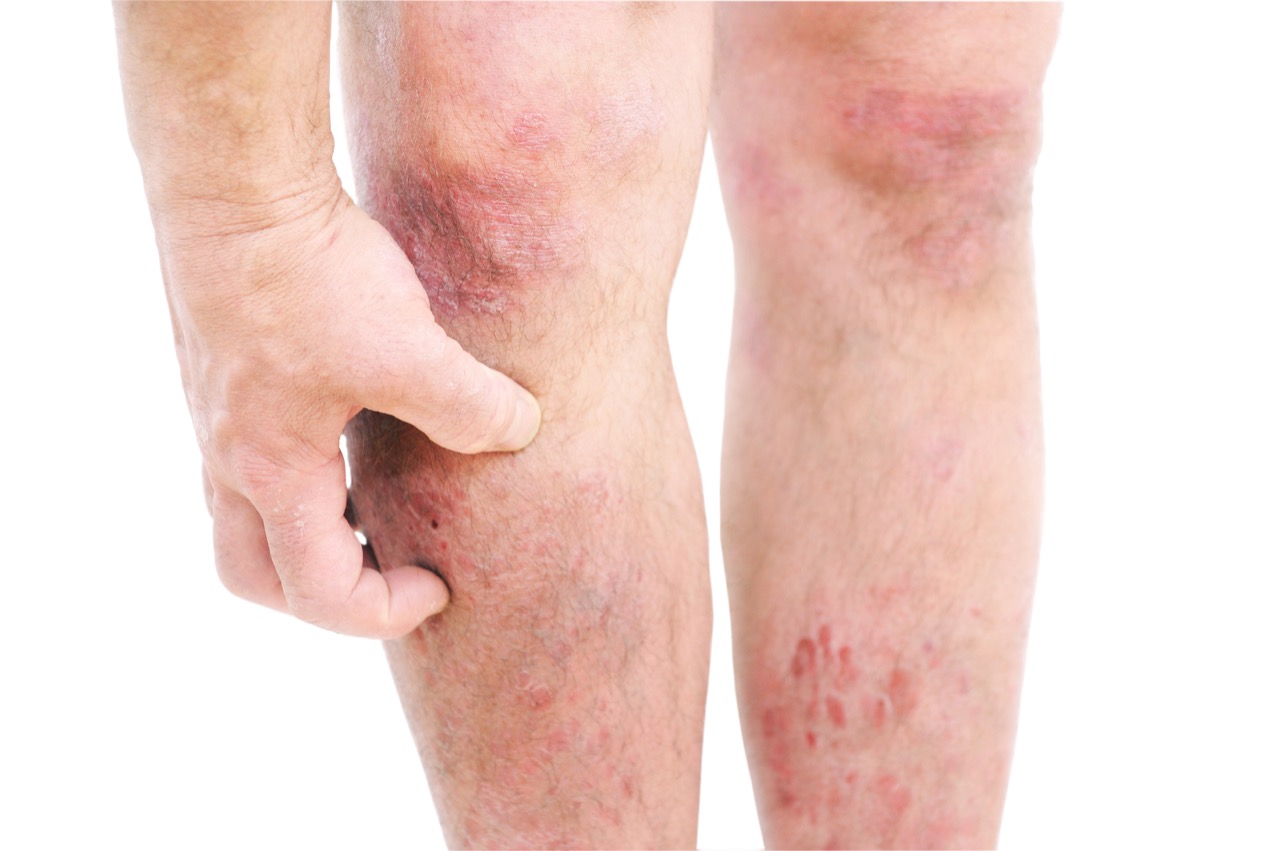
Atopic dermatitis, also called eczema, is a very common skin condition that often begins in childhood but can occur in adolescence and adulthood. This condition causes itchy, red, dry, and thickened rashes affecting the flexor surfaces of the skin; such as the inside of the elbow or behind the knee.

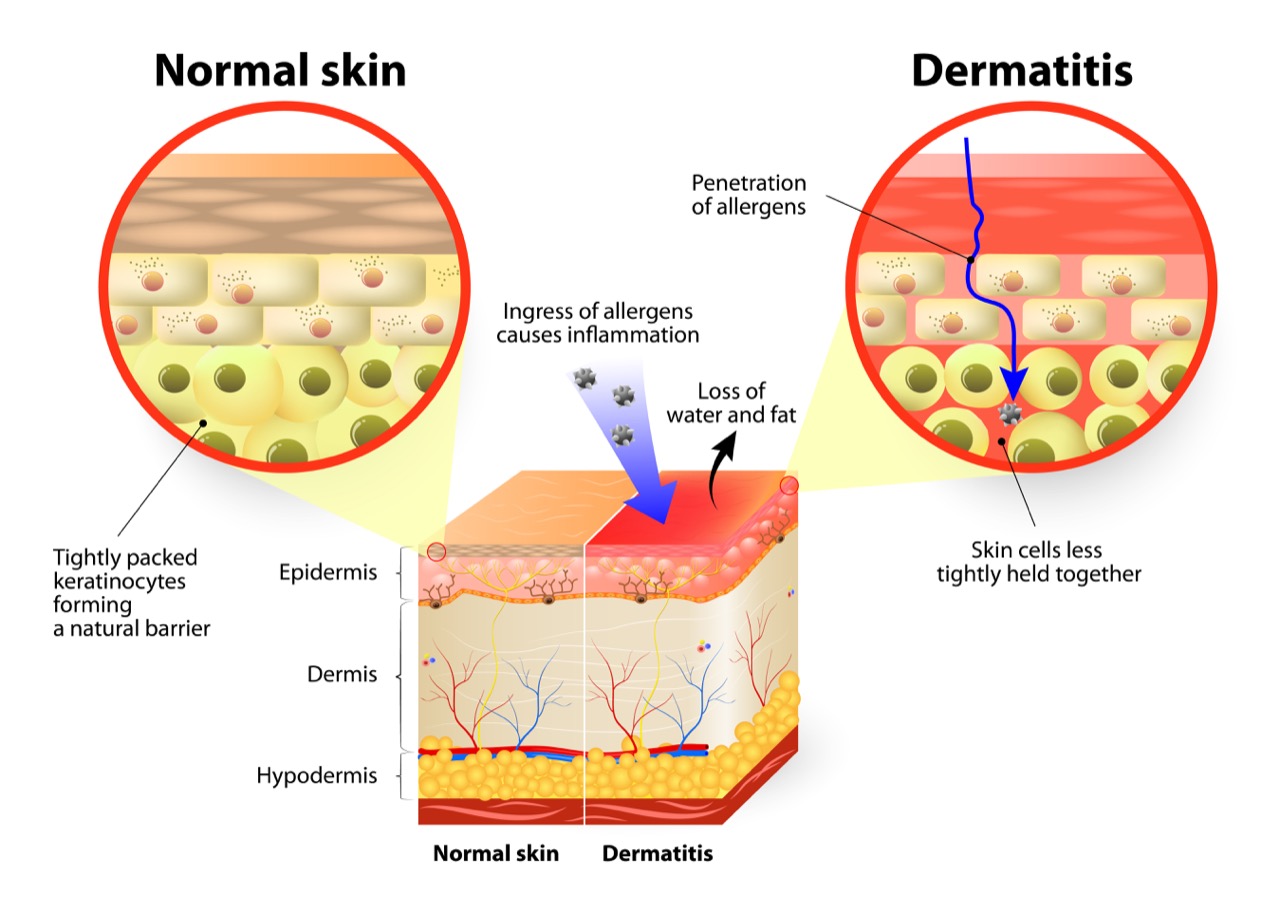
Eczema is thought to be an allergic condition, and one of the three that make up the “allergic triad”. These include atopic dermatitis, seasonal allergies, and asthma. Patients with these conditions are thought to have immune systems that are more sensitive to allergens. In fact, it is common for patients with atopic dermatitis to also have a history of chronic stuffy or itchy nose (allergic rhinitis), asthma, and/or food allergies. 

Atopic dermatitis can come in several different forms:

  • Hand dermatitis is a type that mainly affects the wrists and back of your hands; it is commonly seen among people whose hands are regularly exposed to wet environments.
  • Nummular eczema appears as multiple, coin-shaped rashes on the legs and arms. Over time the central portion of the lesions may clear, resulting in ring-shaped skin findings.
  • Eyelid eczema, as the name suggests, affects the eyelids. A similar type, atopic cheilitis, is a variant that causes dryness and peeling of the lips.

What are the symptoms?

Common symptoms of atopic dermatitis include:
  • Dry skin
  • Intense itch
  • Red to brownish-gray patches of skin
  • Small bumps that may leak fluid and crust over if scratched.
  • Scaly, thickened, or cracked skin
The location of atopic dermatitis rashes may actually differ based on race and age of the patient. Caucasian patients tend to experience classic symptoms on flexor surfaces of the skin. African American, Asian, and pediatric patients tend to experience atopic dermatitis on extensor surfaces, such as the outside of elbows or the front of knees.

Atopic dermatitis varies widely in severity. Some patients only experience the occasional mild rash that clears without the use of medications. However, many patients experience AD severe enough to interfere with daily activities, reduce mental well-being, and impair sleep, leading to significantly reduced quality of life.

Common Questions

Is there a cure for atopic dermatitis?

There currently is no medication that completely cures eczema. Currently, treatments are directed at reducing the severity of symptoms and reducing exposure to triggers that may cause worsening or symptoms. For more information on treating itch in atopic dermatitis visit our treatment page here.

Where does atopic dermatitis come from?

Researchers believe that atopic dermatitis arises due to a combination of genetic and environmental triggers. However, the exact way they interact to cause this condition is not completely understood. Examples of common triggers include:
  • Dry skin
  • Ordinary household products (hand soap, laundry detergent, shampoo, and surface cleaner)
  • Fragrances
  • Fabrics
  • Antibiotic ointments
  • Certain dyes
  • Emotional and physical stress
  • Bacterial and skin infections

Who gets atopic dermatitis?

  • Children and infants are most likely to suffer from atopic dermatitis. Studies have shown that up to 20% of children worldwide experience atopic dermatitis, with symptoms usually appearing before age 5.
  • While atopic dermatitis resolves in most children by late childhood, it may continue into adulthood for some.

Is atopic dermatitis contagious?

Atopic dermatitis is not an infectious disease; therefore, it is not contagious and cannot be passed from one person to another.

How is atopic dermatitis diagnosed?

Physicians can diagnose atopic dermatitis based on a thorough skin examination and a close evaluation of your medical and family history. Physicians may also suggest patch testing to rule out other skin diseases. Atopic dermatitis is often accompanied by other allergies and unknown triggers, which can be identified through patch testing.

Atopic Dermatitis

Read more …What is Atopic Dermatitis?

  • Hits: 789